How to Get More Views on YouTube Videos?
How to get more YouTube views in 2027 with 15 practical tips for better topics, thumbnails, retention, SEO, and sustainable channel growth
You spend hours planning, filming, and editing a video. You upload it, wait for the views to arrive, and then see a number much smaller than you expected. If that sounds familiar, you are not alone.
Getting more views on YouTube is not simply a matter of uploading more often or adding a longer list of tags. Viewers need a reason to choose your video, and the content needs to deliver what they came for. That starts with understanding your audience, choosing useful topics, creating clear titles and thumbnails, and making each video easy to discover.
In this guide, you will learn 15 practical strategies for attracting relevant viewers, improving your videos, and using YouTube Analytics to make better decisions over time.
Why Are YouTube Views Important?
Views show that people are finding and choosing your content. Comparing views across videos can also help you identify subjects that interest your audience. But a view count is only one part of the picture.
Watch time shows how much time people spend watching, while audience retention helps you see which parts hold their attention. Returning viewers can indicate whether your channel is giving people a reason to come back. Together, these metrics provide more context than views alone.
A video with fewer views can still be successful if it reaches the right people, answers their questions, or encourages them to watch another useful video. On the other hand, a high view count may have limited value if viewers leave quickly because the content was not what they expected.
Focus on sustainable organic growth: attract people who are genuinely interested in your subject and give them a reason to trust your next upload. No particular view count guarantees monetization, revenue, or lasting channel growth.
How Does YouTube Help Viewers Discover Videos?
People find videos in several places, and each discovery surface serves a different purpose:
- YouTube Search: Viewers enter a question or topic and choose from the results.
- Home page: Viewers see personalized recommendations when they open YouTube.
- Suggested videos: Viewers encounter recommendations alongside or after a video they are watching.
- Shorts feed: Viewers discover short-form videos while scrolling through the feed.
- Subscriptions and notifications: Subscribers may see new uploads in their subscription feed or receive notifications, depending on their settings.
- External sources: Viewers arrive from websites, social media, newsletters, and other places outside YouTube.
YouTube does not use one universal formula for every surface. Its explanation of Search describes relevance, engagement, and quality as important elements. Its discovery guidance explains that recommendations can consider viewer interests, watch and search history, feedback, and how well videos interest and satisfy similar viewers.
The practical takeaway is to make videos for people first, then help the right viewers understand what each video offers.
15 Practical Ways to Get More Views on YouTube Videos
1. Understand Your Target Audience
Before planning a video, define who it is for and what that person wants to accomplish. A viewer looking for a quick beginner tutorial needs a different explanation from someone comparing advanced techniques.
Start with a simple audience profile: What problems do viewers face? What questions do they ask? What knowledge do they already have? Read your comments, look at questions under related videos, and check your audience reports in YouTube Studio.
For example, a cooking channel could focus on affordable meals for busy students rather than alternating randomly between restaurant reviews, baking experiments, and kitchen gadget news. A clear audience does not prevent experimentation; it gives experiments a useful direction.
2. Choose Topics People Actually Want to Watch
A well-produced video can struggle if few people are interested in its topic or if the idea is too broad. Look for questions your intended viewers already have, then choose an angle you can explain particularly well.
Build an idea list using:
- YouTube and Google search suggestions.
- Questions in comments on your videos and relevant channels.
- Topics competitors cover, especially questions their videos leave unanswered.
- Audience questions from communities where your viewers participate.
- YouTube Analytics, including the videos and searches bringing viewers to your channel.
- Relevant trends that connect naturally to your subject.
Search suggestions can reveal possible topics, but they do not provide exact search-volume figures. Treat them as starting points, not proof of demand. Before filming, ask: “Who needs this, and what will they be able to do after watching?”
3. Research YouTube Keywords Before Creating Videos
YouTube keyword research helps you understand the language viewers use. A primary keyword describes the main topic, while related phrases can clarify supporting questions and terminology.
Consider search intent as well. Someone searching “beginner guitar chords” may want a demonstration; someone searching “best beginner guitar” is probably comparing instruments. A specific phrase such as “how to change guitar chords smoothly” can give your video a clearer focus than a broad term such as “guitar.”
Look for relevant opportunities where existing results do not fully answer the question. A niche may be less competitive, but do not assume a phrase is easy to rank for without evidence. Put your main phrase naturally in the title and description when it fits, and choose topics based on audience value as well as apparent popularity.
For a more detailed process, read how to find YouTube keywords for your videos.
4. Write Attention-Grabbing and Accurate Video Titles
Your title tells viewers what the video is about and why it may be worth their time. Make the benefit specific, and place the main keyword near the beginning when it reads naturally. You do not need to repeat the same phrase in several forms.
Curiosity can help, but the title must match the video. If you promise a beginner-friendly tutorial, make sure a beginner can follow it. Here are four examples of clearer titles:
| Topic | Before | After |
|---|---|---|
| Cooking | My Dinner Recipe | One-Pan Chickpea Dinner for Busy Weeknights |
| Fitness | Workout Tips | Beginner Bodyweight Workout You Can Do at Home |
| Photography | Better Photos | How to Take Sharper Indoor Photos Without Flash |
| Gardening | Growing Tomatoes | How to Grow Tomatoes in Containers: A Beginner’s Guide |
Use the YouTube Title Generator to brainstorm alternatives, then edit the suggestions so they accurately reflect your video and sound like your channel.
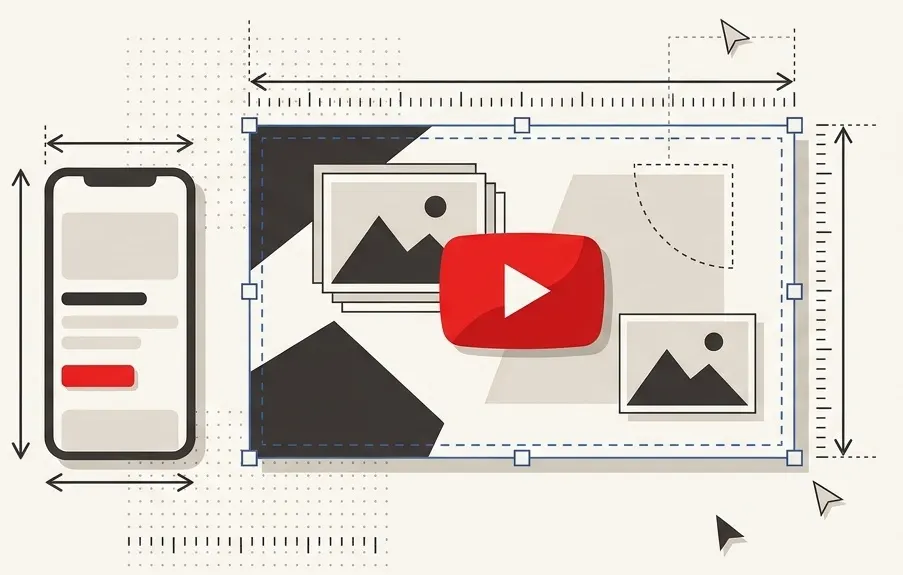
5. Create Attractive and Relevant Thumbnails
A thumbnail should help someone understand the video at a glance. Choose one clear visual focus, use contrast to separate important elements, and keep any text short enough to read on a phone. Consistent colors or visual elements can make your channel recognizable, but clarity matters more than decorating every image the same way.
Let the title and thumbnail work together rather than repeat each other word for word. For a container-gardening video, a title might explain the beginner problem while the thumbnail shows a healthy tomato plant and a simple “Small Space” label.
Use images that represent the actual content. Misleading before-and-after photos or exaggerated results may win a click but disappoint viewers. For design fundamentals, see the YouTube thumbnail size guide.
If the feature is available for your video, YouTube Studio’s title and thumbnail A/B testing can help you compare options. Use results as evidence, not as a promise that a particular design will work for every audience.
6. Improve the First 30 Seconds of Your Videos
The opening is where viewers decide whether the video appears to deliver on its title and thumbnail. Show the result, introduce the question, or begin the demonstration quickly. Remove long greetings, unrelated announcements, and explanations viewers do not need yet.
For example:
- Weak opening: “Hey everyone, welcome back. Before we start, let me tell you about my week…”
- Stronger opening: “Your tomatoes keep wilting in containers? Let’s check the three most common causes and what to do about each one.”
Give people a clear reason to continue, but do not exaggerate the outcome. Check your video’s audience retention report for early drop-offs and consider whether the introduction, pacing, or promise needs work. There is no universal retention percentage every video must reach.
7. Create Helpful and Engaging Video Content
Getting the click is only the beginning. A useful video answers the question it raises, gives viewers enough detail to act, and respects their time.
Outline the main steps before recording. Explain unfamiliar terms, show relevant examples, and remove repeated points during editing. For a tutorial, demonstrate the result and common mistakes rather than only describing them. For a review, explain who the product is and is not suitable for.
Clear audio and a visible subject often matter more than expensive equipment. Use the best light and sound you can reasonably achieve, and keep the video focused on the audience’s goal. Original explanations, demonstrations, and observations give viewers a reason to choose your version of a topic.
8. Write SEO-Friendly YouTube Descriptions
A good description gives viewers context before and after they watch. Start with a natural summary of the video and include your primary topic where it makes sense. Add related terms only when they help explain what the video covers.
Depending on the video, include timestamps, relevant resources, links to related content, and a simple call to action. For example, a beginner camera tutorial might link to a follow-up lesson on lighting and include timestamps for setup, focus, and exposure.
A YouTube Description Generator can provide a starting draft. Check every detail and link before publishing, and replace generic language with information specific to your video. A description should help a person, not repeat a keyword in every sentence.
9. Use YouTube Tags and Hashtags Correctly
Video tags are descriptive keywords entered in YouTube Studio. According to YouTube’s tag guidance, they can be useful when a topic is commonly misspelled, but otherwise play a minimal role in discovery. Use relevant variations when appropriate, and avoid spending more time on tags than on the video itself.
Hashtags are different: they are clickable topic labels that can appear in titles or descriptions and lead to related results. Choose relevant hashtags sparingly; unrelated or excessive hashtags can be misleading or violate policy. Do not paste a long list of tags into the description.
For more context, see whether YouTube tags still matter for SEO.
10. Use Playlists to Organize Related Videos
Playlists make it easier for viewers to find the next relevant video. Group content around a clear task or interest, and arrange the videos in an order that makes sense.
A photography tutorial channel, for example, could create separate playlists for “Camera Basics,” “Indoor Lighting,” and “Photo Editing for Beginners.” The camera basics playlist might begin with camera settings, followed by focus, exposure, and a practical shooting exercise.
Give each playlist a descriptive title and review it as you publish new material. Playlists can improve navigation and encourage continued viewing, but they do not automatically increase a video’s ranking.
11. Publish Consistently Without Sacrificing Quality
A realistic schedule makes it easier to plan, produce, and learn from your work. It does not need to mean daily uploads. YouTube’s performance guidance says growth in views across uploads is not correlated with the time between uploads.
Choose a pace you can maintain while researching topics, recording clearly, and reviewing performance. Plan several ideas in a simple content calendar, allow time for editing, and adjust if the schedule begins to lower quality or cause burnout.
A creator who can make one useful video every two weeks may be better served by that routine than by rushing out several videos merely to meet a target. There is no single upload frequency that works for every channel.
12. Use YouTube Shorts to Reach New Viewers
Shorts can introduce your channel to people browsing short-form content. Choose an idea that works on its own: a quick answer, one useful demonstration, or a single mistake to avoid. Start with the point and provide enough context that viewers understand the Short without having seen another video.
For example, a longer photography tutorial could inspire a Short showing one way to reduce glare in an indoor photo. The Short should provide a useful tip, not just act as an advertisement for the longer lesson.
Where appropriate, add a related video from your channel in Studio. YouTube’s related-video instructions note that this feature requires advanced feature access. Remember that Shorts viewers may behave differently from long-form viewers; success in one format does not guarantee growth in the other.
13. Share Videos Through Relevant Channels
Thoughtful YouTube video promotion puts a useful video in front of people who already care about the subject. Share it in a relevant newsletter, embed it in a helpful blog post, or post a short explanation on a social account where your audience is active.
In online groups, read the rules first. Answering a question with useful context is more valuable than dropping a link into unrelated conversations. Collaborations with creators serving a similar audience can also introduce both channels to interested viewers when the topic genuinely benefits both audiences.
Avoid buying artificial views, automated traffic, spam comments, and services that promise inflated engagement. These shortcuts do not build a reliable audience and can violate YouTube policies. Review YouTube’s spam policy before using any promotional service.
14. Study YouTube Analytics and Improve Your Strategy
YouTube Analytics helps you investigate what happened after publication. Review impressions, click-through rate (CTR), views, watch time, audience retention, traffic sources, returning viewers, and audience geography together rather than treating any one number as the answer.
For example, impressions CTR describes how often viewers watched after a counted thumbnail impression on YouTube. It does not include every view, and it varies by audience and traffic source. Wait for enough data and compare similar videos over time, as YouTube explains in its CTR guidance.
- High impressions but low CTR: Review whether the title and thumbnail make the benefit clear. Also check where impressions came from.
- Good CTR but weak retention: Examine whether the opening and the rest of the video deliver what the packaging promises.
- Strong retention but limited impressions: Investigate topic demand, competition, audience size, and available discovery sources.
These are diagnostic clues, not guaranteed explanations. A small sample or a loyal early audience can make results look different from wider distribution. Compare geography and returning-viewer trends with the content you publish to see whether you are reaching the people you intended.
The YouTube Channel Statistics tool can help you review public channel figures. For private metrics such as your own retention and detailed traffic sources, use YouTube Studio.
15. Update and Improve Older Videos
An older video can remain useful long after publication. Review videos that address ongoing questions and check whether their titles, thumbnails, descriptions, and links still help viewers.
Correct inaccurate information where possible in the description or a pinned comment, and direct viewers to a current follow-up when the original video itself is outdated. Add relevant resources, place the video in an appropriate playlist, and consider a clearer title or thumbnail if the existing packaging no longer represents it well.
If an important demonstration has changed, create a new video rather than relying on a metadata edit to fix the content. Updating a title or description does not guarantee more views; the goal is to make a useful video more accurate and easier to understand.
Common Mistakes That Stop YouTube Videos From Getting More Views
Many growth problems come from repeating avoidable mistakes rather than missing a secret setting:
- Creating without an audience in mind: A vague video may not solve a clear problem for anyone.
- Skipping topic research: You can invest heavily in an idea before checking whether viewers need it.
- Using misleading packaging: Clicks are less useful when viewers feel the video did not deliver.
- Ignoring retention: You may miss confusing openings, slow sections, or unanswered questions.
- Keyword stuffing: Repetitive titles and descriptions are difficult to read and do not replace useful content.
- Adding irrelevant tags or hashtags: They can confuse viewers and may violate YouTube’s policies.
- Publishing unrelated content without a plan: Viewers who enjoy one upload may have little reason to return for the next.
- Buying views or artificial engagement: Inflated numbers do not represent a real audience and can create policy risks.
- Copying competitors: Imitation without original value gives viewers little reason to choose your video.
- Ignoring Analytics: Without reviewing results, it is harder to identify what to improve.
- Expecting overnight success: Premature conclusions can lead you to abandon useful ideas before learning from them.
How Long Does It Take to Get More Views on YouTube?
There is no reliable timeline that applies to every channel. Results depend on factors such as channel history, topic demand, competition, content quality, audience interest, discovery opportunities, and how consistently you can publish useful content.
Some videos attract attention soon after publication. Others grow gradually as people search for their topic or discover related videos. Instead of setting a deadline for a guaranteed view count, review each upload, identify one or two improvements, and apply what you learn to the next video.
Frequently Asked Questions About Getting More YouTube Views
How can I get more views on YouTube videos?
Start with a topic your audience cares about, give the video an accurate title and thumbnail, and deliver a helpful answer. Then review traffic sources and retention to guide your next improvement.
Why are my YouTube videos getting no views?
Possible reasons include limited topic demand, unclear packaging, a new channel with little audience data, or strong competition. Check that the video is public, then look at impressions and traffic sources before deciding what to change.
How can beginners get their first 1,000 YouTube views?
Publish useful videos for a specific audience, answer questions people are already asking, and share your work in relevant places where promotion is allowed. For a broader starting plan, read how to grow a YouTube channel from zero. The time needed to reach 1,000 views varies.
Do YouTube tags help get more views?
Tags can help with common misspellings, but YouTube says they otherwise have a minimal role in discovery. Prioritize the topic, title, thumbnail, description, and the content itself.
Do thumbnails really affect YouTube views?
Thumbnails can influence whether someone chooses to watch when a video is shown. A clear, relevant image helps communicate the idea, but its effect depends on the audience, title, and where the video appears.
How often should I upload videos to get more views?
There is no required frequency for every channel. Choose a schedule that lets you maintain quality and learn from each upload, whether that means weekly, twice a month, or another sustainable pace.
Are YouTube Shorts helpful for growing a channel?
Shorts can introduce your content to new viewers and give you another format for useful ideas. However, Shorts views do not automatically translate into long-form views or subscribers.
Can sharing YouTube videos on social media increase views?
Relevant sharing can bring viewers from outside YouTube. Explain why the video is useful to that particular audience, follow community rules, and avoid posting the same link indiscriminately.
Does YouTube SEO help videos get organic views?
YouTube SEO can help you match your content and metadata to what viewers are looking for. It works best alongside a genuinely useful video; keywords alone do not guarantee search placement or recommendations.
Can I buy YouTube views safely?
Avoid services that promise artificial views or inflated engagement. They can violate YouTube policies and do not create a sustainable audience. Legitimate advertising is different from purchasing fake traffic, but paid promotion still does not guarantee loyal viewers.
Final Thoughts
Learning how to get more views on YouTube videos starts with understanding the people you want to reach. Choose topics that matter to them, make the value clear through honest titles and thumbnails, and deliver content that fulfills the promise.
Use YouTube Analytics to spot questions worth investigating, test improvements thoughtfully, and keep building on what you learn. Sustainable growth comes from helping real viewers—not chasing shortcuts or trying to satisfy a supposed universal algorithm.

Ahassan
CEO / Co-Founder
Hello, I'm A Hassan, the owner of YTLargeTools. I created YTLargeTools with a simple goal: to make useful online tools accessible to everyone. I believe everyday tasks should be simple, convenient and easy to complete without unnecessary complications.
Recent Posts