How to Rank YouTube Videos on Google?
how to rank YouTube videos on Google with practical tips for keyword research, titles, descriptions, thumbnails, and search intent.
A useful YouTube video can reach people beyond YouTube. When someone searches Google for a repair, recipe, software walkthrough, or product demonstration, a video may be exactly what they need.
But appearing on Google is not as simple as adding a keyword to a title or collecting a certain number of views. Google uses multiple systems to identify relevant, useful results for each search. Your job is to make a genuinely helpful video, describe it accurately, and make it easy for both viewers and search engines to understand.
This guide covers how Google and YouTube search differ, how to research video-friendly queries, and how to optimize and measure a video without relying on SEO myths.
How Does Google Rank YouTube Videos in Search Results?
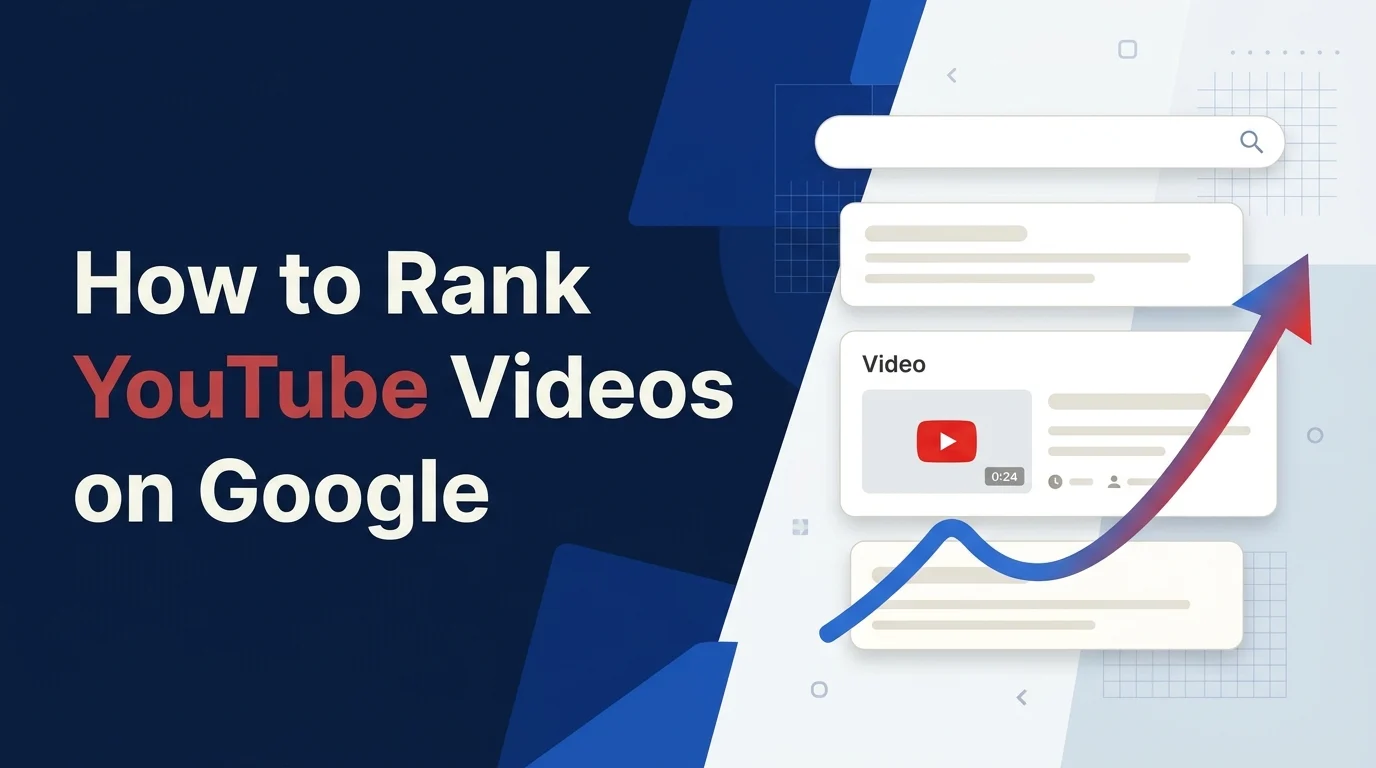
Google first needs to discover and process a page before it can consider showing it in search results. For videos, Google also looks for information that helps it understand the video and determine whether it is eligible for video features.
Google may show a YouTube video when it considers the video relevant and useful for a particular query. Search results can vary by query, location, device, and other context. Google does not publish a simple formula that lets creators calculate a video's position.
Think about optimization in three stages:
- Discovery: Can Google find the page and video?
- Understanding: Do the title, description, and video clearly communicate the topic?
- Usefulness: Does the video answer the searcher's question well enough to compete with other results?
Google may display videos in the main search results, in video-specific features, or under the Videos tab. An ordinary web result is a link to a page that Google considers relevant; it may lead to a YouTube watch page or to a website containing an embedded video. A video result is a video-specific presentation that may include a thumbnail and, sometimes, links to particular moments. The appearance depends on the query and eligibility; neither format is guaranteed.
For the technical requirements, see Google Search Central's video SEO guidance.[^https://developers.google.com/search/docs/appearance/video]
How Google Search and YouTube Search Rankings Are Different
Google Search and YouTube Search are related discovery channels, but they are not interchangeable. A video that performs well on one may not perform equally well on the other.
| Consideration | Google Search | YouTube Search |
|---|---|---|
| What competes | Videos can compete with articles, product pages, forums, and other results. | Results focus on content available within YouTube. |
| What the searcher may want | A quick written answer, a website, a video demonstration, or another format. | A video or other YouTube content related to the query. |
| What creators can measure | YouTube's external traffic reporting can show referring sources; Search Console can report on a website you own. | YouTube Analytics can show YouTube Search traffic and search terms. |
YouTube says its search system prioritizes relevance, engagement, and quality. It considers how well a video's title, tags, description, and content match a query, and it may use query-specific watch time as an engagement signal. That is a description of YouTube Search, not a published formula for Google Search.[^https://support.google.com/youtube/answer/16090438?hl=en]
In practical terms, optimize for the person behind the query. If Google mostly shows written instructions for a question, a strong video can still be useful, but the results suggest that a standalone video may not be the only-or most prominent-format Google chooses to show.
How to Find Keywords for Ranking YouTube Videos on Google
Start with a question your intended viewer needs answered, not a list of phrases to squeeze into metadata. A useful target is specific enough to suggest what the video should show.
- Write down the core problem. For example, “fix a dripping kitchen faucet” is more actionable than “plumbing.”
- Expand the wording. Check Google and YouTube autocomplete and related searches for variations. Suggestions are research leads, not reliable measures of search volume.
- Inspect Google results. Search the phrase and note whether videos appear in the main results or Videos tab. Look at the formats, apparent audience, and questions covered.
- Check the actual intent. Does the searcher want a demonstration, a definition, a comparison, or a quick answer? A video is especially useful when seeing a process makes it easier to follow.
- Choose a primary phrase and supporting concepts. Use one clear topic as the focus, then include related details only when your video addresses them.
For example, “how to change a bike tire” suggests a visual tutorial. Related questions might include which tools are needed and how to avoid pinching the inner tube. Those questions can inform the script and chapters-not just the tags.
Search results are a snapshot, not a promise. Repeat your research in the location and language you serve, and remember that personalization and device differences can change what you see. If you use keyword tools with volume estimates, treat the numbers as estimates rather than exact forecasts.
How to Optimize YouTube Video Titles for Google Search
A good title makes the subject and benefit clear before the viewer clicks. Include the main phrase naturally when it accurately describes the video, and put the most useful words early enough to remain understandable if the title is shortened.
Compare these examples for a beginner bicycle-repair video:
- Too vague: “A Quick Fix Everyone Should Know”
- Overloaded: “Bike Tire Change Fix Bike Tire Bicycle Tire Repair Bike”
- Clear and specific: “How to Change a Bike Tire: A Beginner's Guide”
The final title states the task and intended audience without making a promise the video cannot keep. Add a model, version, or year only when that detail matters and the content actually covers it. A title containing “2027” will not make an outdated demonstration current.
For a starting point, try the YouTube Title Generator, then rewrite the suggestion to reflect the exact video. Read it alongside the thumbnail: together, they should make one coherent promise rather than repeat a vague phrase.
How to Write SEO-Friendly YouTube Descriptions
Your description should help a viewer decide whether the video answers their question and navigate the information once they start watching. It is also a place to provide context that may be difficult to fit into the title.
A useful structure is:
- Open with a specific summary. Say what the video demonstrates and who it is for.
- Add important details. Name the equipment, software version, prerequisites, or limitations when they matter.
- Include accurate chapters. Label meaningful sections using timestamps that match the video.
- Link to genuinely useful resources. These might include a written guide, source documentation, or a related video.
- Add relevant credits or disclosures. Identify sponsorships or affiliate relationships where applicable.
For a bike tutorial, an opening might read: “Learn how to change a bicycle tire and inner tube using tire levers and a pump. This beginner walkthrough covers removing the wheel, checking the tire, and reinstalling it.”
Avoid repeating the same keyword in every sentence or pasting a block of unrelated terms. There is no magic description length: use enough space to explain the video and help viewers take the next step. The YouTube Description Generator can help you organize a draft, but check every claim and timestamp against the finished video.
For manual chapters, YouTube says the first timestamp must start at 00:00, the list must contain at least three timestamps in ascending order, and each chapter must be at least 10 seconds long. Google may use YouTube description timestamps to identify key moments, but displaying them is not guaranteed.
How to Use YouTube Tags and Hashtags Effectively
Tags and hashtags are different. Tags are metadata entered in YouTube Studio; hashtags are visible, clickable labels written in the title or description.
According to YouTube, tags can help when a subject is commonly misspelled, but otherwise play a minimal role in discovery. The title, thumbnail, and description are more important pieces of metadata for helping people decide what to watch.[^https://support.google.com/youtube/answer/146402?hl=en]
Use a few relevant tags for alternative names or genuine spelling variations, rather than adding every phrase you can find. The YouTube Tag Generator can suggest ideas; remove anything that does not describe your video. Do not paste excessive tags into the description-YouTube warns that doing so can violate its spam policies.
For hashtags, choose only labels that accurately describe the subject. They can help people explore a topic on YouTube, but they are not a shortcut to Google rankings. If a hashtag distracts from the description or attracts the wrong audience, leave it out.
How to Create Videos That Match Google's Search Intent
Before recording, ask: “What would make the person searching this phrase feel that their question has been answered?” The answer should shape the video, not just its title.
For a how-to query, show the task clearly, name the tools, and demonstrate the result. For a comparison, explain the criteria and trade-offs. For troubleshooting, start with a recognizable symptom and show how to check the likely causes. If a topic involves safety, qualifications, costs, or changing product interfaces, explain the relevant limitations.
Use the search results as a research tool. If competing tutorials skip an important setup step or show an older interface, address that gap when you can do so accurately. Do not copy another creator's script or visuals; add your own demonstration and experience.
Make the answer accessible, too. Speak clearly, show small interface details at a readable size, and review captions for mistakes-especially product names, measurements, and technical terms. Captions help viewers follow the content, but they are not a guaranteed ranking switch.
Example: Optimize a video for “how to change a bike tire”
Imagine you have recorded a beginner-friendly tutorial showing how to replace a bicycle tire and inner tube. Here is a realistic workflow:
- Check the query. Search Google for “how to change a bike tire” and review the current results. Note whether viewers are being shown complete tire changes, inner-tube repairs, or both. Do not assume one search result reflects every location.
- Define the scope. Decide which wheel and brake setup you are demonstrating. Explain at the start if other bicycle designs require different steps.
- Show the outcome and tools early. Briefly display the repaired wheel, tire levers, replacement tube, and pump, then begin the process.
- Write an accurate title. Use “How to Change a Bike Tire: A Beginner's Guide” if the finished video delivers that lesson.
- Add a useful description and chapters. Summarize the process and list real timestamps, such as “00:00 Tools and preparation,” “00:35 Remove the wheel,” and “02:10 Replace the tube”-but only if those times match your edit.
- Prepare the thumbnail. Use your own clear image of the wheel and tire lever. A short label such as “CHANGE A TIRE” can reinforce the topic without covering the demonstration.
- Publish and measure. Set the video to public, check playback and captions, then review traffic sources and retention in YouTube Studio. Refine the packaging or make a better follow-up based on what viewers actually need.
This is a method for making a video easier to find and use-not a prediction that it will rank. If the query primarily requires information you do not cover, adjust the video or target a more accurate phrase.
How to Improve Video Engagement and Viewer Retention
Retention describes how viewers continue watching over a video's duration. It is useful feedback on the viewing experience. YouTube discusses engagement in its own search system, but creators should not assume a particular retention percentage is a direct Google ranking requirement.
Try these practical improvements:
- Deliver the promise quickly. Replace a long generic introduction with a brief explanation of the result and any necessary prerequisites.
- Remove friction. Cut repeated instructions and show close-ups when a small movement or setting matters.
- Organize longer videos. Use clear transitions and chapters so viewers can find the section they need.
- Address predictable mistakes. Show what can go wrong and how to recognize it, rather than presenting only a perfect run-through.
- Review retention in context. A drop near the beginning may suggest an unclear opening; a spike may mean viewers replayed an important step. Investigate before drawing conclusions.
A short, complete answer can be more useful than a longer video padded to increase watch time. Equally, a complex task may need more time. Let the subject determine the length.
How to Optimize YouTube Thumbnails for More Clicks
A thumbnail should make the subject recognizable at a glance and support the title's promise. For a tutorial, a clear view of the object or interface may be more informative than a dramatic reaction image.
- Use one obvious focal point and enough contrast to distinguish it on a small screen.
- Keep any text short and readable; the title can carry the details.
- Show the real product, process, or result featured in the video.
- Check the image at a small size before uploading.
- Avoid misleading before-and-after images or claims that the video cannot substantiate.
If you study other thumbnails, use them for research rather than copying a creator's artwork. YouTube's click-through rate is useful for understanding performance on eligible YouTube surfaces, but it should not be treated as a direct measurement of Google Search click-through rate.
How to Get Your YouTube Videos Discovered Through Google Search
Once the video is ready, make it available to the audience you want to reach. Check that it is public, plays correctly, and is not restricted in a way that prevents your intended viewers from watching. Then promote it where it genuinely answers a question: a relevant website page, newsletter, community resource, or existing tutorial.
Embed the video on a useful page you control
If you have a website, create a relevant page that helps visitors understand the video. A dedicated watch page can give a video a clear home, while a longer article can embed it alongside written instructions. Google may index the video on your page and on the third-party host, but neither outcome is automatic.
For a page intended to qualify for Google's video features, Google says the video must be on an indexed watch page where the video is the main content, and a valid thumbnail must be available. A page can still appear as an ordinary web result even when it is not eligible for a video feature. Follow Google's current video SEO requirements rather than assuming every embed will produce a video result.[^https://developers.google.com/search/docs/appearance/video]
Use the YouTube Embed Code Generator if you need embed code for a public video. Test the player on desktop and mobile, and add useful supporting information rather than publishing an otherwise empty page.
For your own site, accurate VideoObject structured data can help Google understand a video. Follow Google's required properties and testing guidance; markup does not guarantee indexing or a rich result. Search Console can help diagnose pages on a site you control, but it does not give you ownership-level Search Console data for the YouTube watch page.
Measure the right traffic source
In YouTube Studio, open the video, choose Analytics, and review its Reach reporting. The external sites or apps report can identify external sources, while the YouTube Search report shows terms used to find the video on YouTube. These are different reports: YouTube search terms are not a list of Google queries.[^https://support.google.com/youtube/answer/9314355]
External traffic may include sources other than Google Search, and reporting detail can be limited. If you have a companion page on your own site, use Search Console to review that page's Google Search performance separately. Compare meaningful periods, record changes you make, and avoid attributing every fluctuation to a single title or thumbnail edit.
Common YouTube Video SEO Mistakes to Avoid
- Optimizing for a phrase the video does not answer. A close keyword match cannot compensate for the wrong subject or an incomplete demonstration.
- Treating views as a Google ranking guarantee. A popular video is not automatically the most relevant result for every query.
- Stuffing titles, descriptions, or tags. Repetition makes metadata harder to read and can create spam problems.
- Using misleading thumbnails or titles. A click is not useful if the viewer discovers the promised content is missing.
- Ignoring the search results page. If Google favors written answers for a query, consider pairing the video with a genuinely helpful article on your own site.
- Publishing inaccurate timestamps or captions. Check the final edit after any changes, especially when a tutorial includes measurements or interface labels.
- Confusing indexing with ranking. A page or video being discoverable does not mean Google will index it, display a video feature, or rank it for your chosen query.
- Changing everything at once. Keep a record of edits and review results over a reasonable period. Search demand, competing content, and other variables can also affect performance.
Frequently Asked Questions About Ranking YouTube Videos on Google
How long does it take for a YouTube video to appear on Google?
There is no fixed timetable. Google must discover and process content, and indexing is not guaranteed. Even an indexed video may not appear prominently for your target query. Focus on making the video public, accurately described, and useful rather than expecting a specific deadline.
Do YouTube tags help a video rank on Google?
Do not rely on them for Google rankings. YouTube says tags play a minimal role in YouTube discovery except in cases such as common misspellings. Clear content, an accurate title, and a useful description deserve more attention.
Does a video need many views to rank on Google?
No minimum view count guarantees a Google ranking. A search result needs to be relevant and useful for the query, and Google uses multiple systems to select results. Make the best answer you can for a clearly defined audience instead of chasing a view threshold.
Can a YouTube video and my website page both appear in Google?
They can both be considered. Google may index a video on a third-party host and on a page that embeds it. Whether either appears, and in what format, depends on eligibility and Google's systems-not on the embed alone.
Do chapters guarantee key moments in Google Search?
No. Accurate timestamps can help describe important sections, and Google may show key moments for eligible videos. Google can also identify moments automatically. Neither method guarantees that key moments will appear.
Should I update an older video or publish a new one?
Update the title, description, captions, or chapters when those details can be corrected without misrepresenting the existing video. If the actual demonstration is outdated or incomplete, a new video may be the better choice. Link the old and new resources where helpful, and clearly explain which information has changed.
Conclusion
Ranking a YouTube video on Google starts with choosing a question that benefits from a visual answer. Research the results, make a video that resolves the problem, and use a clear title, useful description, accurate chapters, and honest thumbnail to explain what viewers will get.
Then make the video accessible, share it in relevant places, and measure Google-related traffic separately from YouTube Search. No tag list or generator can guarantee a position, but a well-made video gives searchers a reason to choose-and benefit from-your result.
Ahassan
CEO / Co-Founder
Hello, I'm A Hassan, the owner of YTLargeTools. I created YTLargeTools with a simple goal: to make useful online tools accessible to everyone. I believe everyday tasks should be simple, convenient and easy to complete without unnecessary complications.
Recent Posts